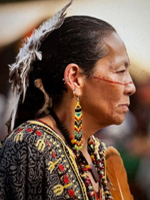
Grandmother Clara Soaring Hawk is Deer Clan Chief/Ambassador of Ramapough Lenape Nation of NJ/NY/ a former chief and presently Ramapough Lenape Nation ambassador.
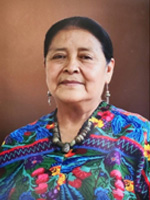
Otilia Lux de Cotí is a Guatemalan leader and former member of that country's Historical Clarification Commission, charged with investigating the human rights violations committed during the Central American nation's 30-year-long civil war. She was later chosen to serve as Minister of Culture and Sport in the cabinet of President Alfonso Portilloa former member of the United Nations Permanent Forum on Indigenous Issues at the United Nations.
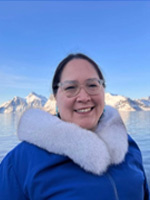
Aluki Kotierk is currently the chair of the UN Permanent Forum on Indigenous Issues. Kotierk is the first Inuk from Canada and Nunavut to hold this position. Aluki is a former co-chair representing Indigenous People's Organizations on the Global Task Force for the International Decade of Indigenous Languages (IDIL) 2022-2032.
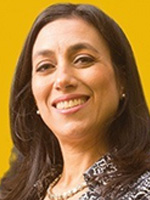
Ms. Laura Flores, Americas Division Director of the Departments of Political and Peacebuilding Affairs (DPPA) and Peace Operations at the United Nations. She previously was Panama's Permanent Representative to the United Nations.
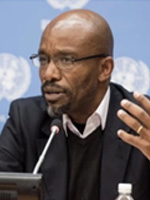
Dr Albert K. Barume is currently the UN Special Rapporteur on the rights of Indigenous Peoples. A national of the Democratic Republic of the Congo, Dr. Barume was among the first lawyers to work on Indigenous Peoples' rights in the 1990s in Africa.
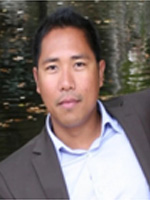
Morse Caoagas Flores is Coordinator, Indigenous Fellowship Programme, Indigenous Peoples and Minorities SectionOffice of the United Nations High Commissioner for Human Rights.
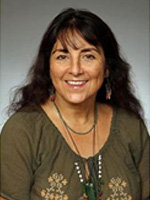
Andrea Carmen, Yaqui Nation is Executive Director of International Indian Treaty Council (IITC). In 1997 she was one of two Indigenous representatives invited to formally address the UN General Assembly for the first time in history at the UN Earth Summit +5.She lives in Tucson Arizona where she and her husband Angel Valencia have a family farm using traditional native seeds and pesticides-free growing methods.
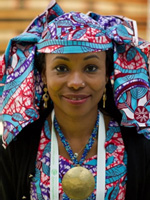
Hindou Oumarou, Coordinator of the Peul Indigenous Women and Peoples Association of Chad, a co-chair of the International Indigenous Peoples Forum on Climate Change

Sheryl Lightfoot, Professor with the Department of Political Science and the Munk School of Global Affairs & Public Policy, University of Toronto.

Michelle Benzing,Programme Analyst Gender, Climate, Peace and Security, UN Women
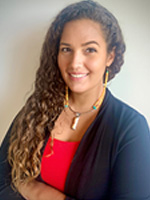
Elizabeth Rule Author, policymaker, public scholar, and advocate for Indigenous communities. Enrolled citizen of the Chickasaw Nation.
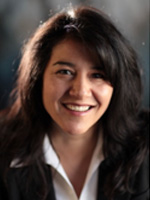
Lea Mackenzie, Member of the UN Permanent Forum on Indigenous Issues
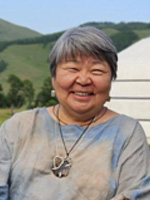
Erjen Khamaganova is a Buryat Mongol elder and founding member of the Council of Elders of the World Union of Indigenous Spiritual Practitioners (WUISP). Based in Mongolia, she is an internationally recognized expert in biological and cultural diversity, focusing on integrating Indigenous spiritual values into environmental conservation and supporting Indigenous guardianship.
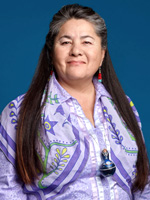
Wakerahkáhtste Louise McDonald Herne is a condoled Bear Clan Mother for the Mohawk Nation Council. She is a founding member of Konón:kwe Council, a circle of Mohawk women working to reconstruct the power of their origins through education, empowerment, and trauma-informed approaches. She has also presented at the United Nations Permanent Forum on Indigenous Issues, and lectures regularly at universities throughout Canada and the United States on Ratinonhsón:ni philosophies and self-determination regarding women. She has been a Distinguished Scholar in Indigenous Learning at McMaster University Institute for Innovation and Excellence in Teaching and Learning (MIIETL) and received an honorary PhD from SUNY Canton.
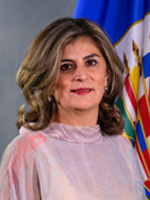
Her Excellency Laura Gil was elected Assistant Secretary General of the OAS on May 5, 2025, for a five- year term, becoming on July 14 the first woman to hold this position in the Organization's history. Prior to her election, she served as Colombia's Vice Minister for Multilateral Affairs (2022-2023) and, from 2023, as Ambassador to Austria and Permanent Representative to the United Nations in Vienna, where she led the adoption - by vote - of the resolution that broke the "Vienna consensus" and established the first independent panel to review the international drug control regime in more than six decades, described as a "turning point" in global drug policy. Under her leadership, Colombia chaired the Vienna Chapter of the G-77+China for the first time (2024).
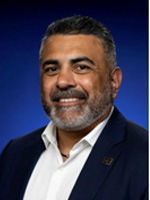
Ambassador Justin Mohamed is Australia's inaugural Ambassador for First Nations People. He is a GoorengGooreng man from Bundaberg in Queensland.Mr Mohamed has a strong connection to community having worked for decades in Aboriginal and Torres Strait Islander organisations, as well as in the government and corporate sectors, on issues spanning health, social justice and reconciliation. Mr Mohamed was most recently Deputy Secretary of Aboriginal Justice in the Victorian Government. He has also held the positions of Chief Executive Officer for Reconciliation Australia and Chairperson of the National Aboriginal Community Controlled Health Organisation, and he has represented Indigenous organisations internationally including at the UN Permanent Forum on Indigenous Issues.

Abigail E. Disney is an award-winning filmmaker, writer, philanthropist, and activist. Abigail's films include The American Dream and Other Fairy Tales, the Emmy Award-winning The Armor of Light, both of which she co-directed with Kathleen Hughes, and Pray the Devil Back to Hell.As a philanthropist and social activist, she has worked with organizations supporting peacebuilding, gender justice, and systemic cultural change.
She is also Chair and Co-Founder of Level Forward, an ecosystem of storytellers, entrepreneurs, and social change-makers dedicated to balancing artistic vision, social impact, and stakeholder return. Shecreated the nonprofit Peace is Loud, which uses storytelling to advance social movements, and the Daphne Foundation, which supports organizations working for a more equitable, fair, and peaceful New York City.
She is currently working on a book about wealth, power, and privilege.
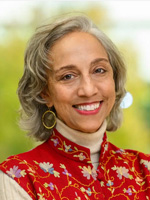
Kavita Ramdas is a globally recognized advocate for gender equity and justice. She is an inspirational speaker and thought commentator on the challenges facing philanthropy and civil society as they seek to advance equitable and sustainable development and gender and racial equity. She currently serves as the Director of the Women's Rights Program at the Open Society Foundations after completing her tenure as Strategy Advisor for MADRE, an international women's rights organization. She founded KNR Sisters, an independent consulting venture.
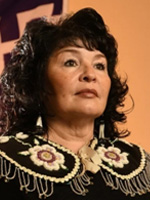
Betty Lyons is the President & Executive Director of the American Indian Law Alliance (AILA) and is an Indigenous and environmental activist and citizen of the Onondaga Nation. Betty has worked for the Onondaga Nation for over 20 years. Ms. Lyons serves as a member of the Haudenosaunee External Relations Committee and has been an active participant at the annual United Nations Permanent Forum on Indigenous Issues(UNPFII) since the first session in 2001. Out of her concern for Indigenous peoples and Mother Earth, Betty serves on numerous boards like, The Future Foundation, the Connie Hogarth Center, The MOST, Skäonoñh- Great Law of Peace Center, and is the Co-Chair of the Center of Earth Ethics.
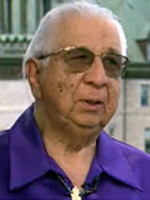
Kenneth Deer is from the Bear Clan of the Mohawk Nation of the Kahnawake territory. He is an award-winning journalist, an educator and an internationally known Indigenous rights activist. He was also an active participant in the development of the UN Declaration of the Rights of Indigenous Peoples, which took 25 years to draft and was adopted in 2007 by 144 states, except for Canada and four other states. He also holds an Honorary Doctorate Degree from Concordia University and was the 2010 recipient of the National Aboriginal Achievement Award.
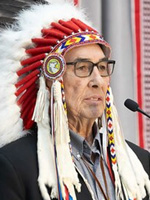
Chief Wilton Littlechild CC AOE MSC KC: J. Wilton Littlechild is a Canadian lawyer and Cree chief who served as Grand Chief of the Confederacy of Treaty Six First Nations. From 1988 to 1993, Littlechild was a Member of Parliament (PC) for Wetaskiwin, Alberta. He was a member of the 1977 Indigenous delegation to the United Nations and has continued to work on the UN Declaration. As a residential school survivor, Grand Chief Littlechild was a commissioner to the Truth and Reconciliation Commission of Canada from 2009-2015. Today he is a practicing lawyer in the Erminiskin Reserve, Alberta.
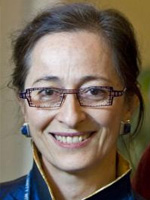
Elsa Stamatopoulou joined Columbia University in 2011 after a 31-year service at the United Nations (in Vienna, Geneva and New York) & was the first Chief of the Secretariat of the United Nations Permanent Forum on Indigenous Issues in 2003. She is Former Director of the Indigenous Peoples Rights Program at the Institute for the Study of Human Rights at Columbia. In 2016, she was featured as one of the UN's 80 Leading Women from 1945-2016. She co-chairs the International Commission on the Chittagong Hill Tracts and is on the Board of the International Work Group on Indigenous Affairs (IWGIA) and other boards.
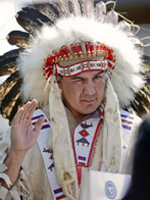
Tyson Running Wolf has served as a Montana State Legislator for five years. In that time, he has drafted and supported legislation that includes protection and/or respectful use of land and resource management. Tyson is formally a Tribal Councilmember of the Blackfeet Tribe in which he served as the Executive Secretary. He is connected deeply to his culture as Nitsitapii and has learned from elders, including his grandfather, the cultural aspects of traditional hunting, land management, and environmental sustainability. He is a cultural leader and a leader of a sacred society as well as a bundle holder.
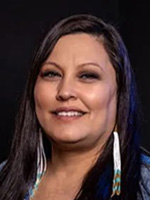
Lona Running Wolf is Blackfeet, Haida, Little Shell Cree, and was born and raised on the Blackfeet reservation. She is currently a faculty member at the University of Montana Western, assisting several tribal community college's educator prep programs in curriculum development and alignment with a cultural and trauma foundation.Lona is passionate about helping American Indian students tap into their ancestral roots to develop a strong sense of pride and self-identity to help them see themselves as Native Americans in a positive light. She believes the key to increasing student achievement and retention is to increase positive self-identity rooted in the culture.
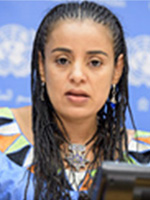
Mariam Wallet Aboubakrine, Tuareg, is a member and former chair of the United Nations Permanent Forum on Indigenous Issues. Mariam is a member of Tin Hinan, an association working for the defense, promotion and development of indigenous peoples in Africa, in particular the Tuareg (Mali, Niger, Burkina Faso, Algeria, Mauritania and Libya). With a Masters in Humanitarian Action from the University of Geneva, her studies focused on interventions in armed conflict, marginalization, natural disasters, and later in her studies, the role of traditional medicine in Tuareg Mali. Currently, Mariam advocates for Indigenous rights in Africa, particularly focused on improving the living conditions of Tuareg people.
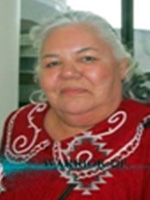
Alvera Sargent is the former Executive Director of the Akwasasne Freedom School. From 1985 to 1988, Alvera worked for the First Nations Financial Project, now known as First Nations Development Institute. She has been working tirelessly towards preserving Indigenous language and culture. Ecology, culture, and spirituality builds the foundation for Alvera's current work in revitalizing the Mohawk language. Alvera is also on Global Advisory Board of Global Alliance of Indigenous Peoples, Gender Justice and Peace.
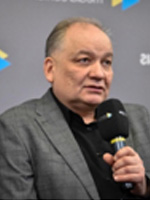
Eskender Bariiev is the Head of the Board of the Crimean Tatar Resource Center a non-governmental organization established in 2015. They protect the rights of the Crimean Tatar People, draft laws and regulatory acts, and support cultural, educational, advocacy, and democratic initiatives related to Crimea and the Crimean Tatar people. They monitor violations of individual and collective rights in the occupied Crimea, document cases of violations, ensure legal, social, and humanitarian assistance to political prisoners and their families, submit appeals to the special and universal treaty bodies, conduct international information campaigns and activities aimed at maintaining the topic of Crimea in the focus, train lawyers and human rights activists and prepare new public diplomats of the Crimean Tatar people.
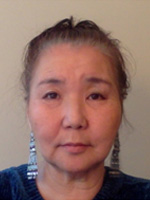
Dr. Vera Solovyeva is an Indigenous (Sakha) person from the Sakha Republic (Yakutia). Her research focuses on how indigenous peoples preserve and develop their cultures and traditions in a contemporary world that is rapidly changing under the pressure of factors such as globalization and climate change. Additionally, she is interested in how indigenous peoples recover lost knowledge and traditions through the study of museum collections.Vera also advocates for social justice and the Empowerment of Indigenous women. She is a member of the Global Advisory Board of the Global Alliance of Indigenous Peoples, Gender Justice, and Peace. She believes that Indigenous Peoples' knowledge, ethics, and values can help to build peace and, therefore, make the world be better place for all people.